
 admin
admin Rifle Ammo Ballistics Explained: Choosing the Right Cartridge for Accuracy and Power
A hunter lining up a shot at 200 yards relies on rifle ammo to deliver a single, precise projectile to the target. Each cartridge combines a primer, propellant, case, and bullet, where the primer ignites the powder to generate expanding gas that propels the bullet down the rifled barrel. This spin-stabilized flight grants the round a flat trajectory and consistent energy transfer, making terminal ballistics predictable for both target shooting and game retrieval. To maximize accuracy, you should match the bullet weight and type to your rifle’s twist rate and intended distance.
Choosing the Right Cartridge for Your Rifle’s Purpose
The cartridge you select dictates everything your rifle can achieve, so match it precisely to the mission. For close-quarters or dense brush, a short, heavy bullet like a .30-30 or .350 Legend offers rapid energy transfer and minimal over-penetration, while long-range precision demands a high-ballistic-coefficient option such as the 6.5 Creedmoor to defeat wind drift. Predator and varmint work favors flat-shooting, lightweight rounds like the .223 Remington for explosive effect on small targets, yet big-game hunting requires a cartridge with sufficient sectional density—think .300 Win Mag—to penetrate deeply through bone and muscle. Your rifle’s twist rate and magazine length will physically limit which cartridges function reliably, so verify those specs before committing. Always choose a round that maximizes your effective hit probability at the distances you’ll actually shoot, not the one with the loudest reputation. Stop chasing hype and match the bullet’s weight and speed to your target’s size and range. Your confidence in the field hinges on this single, deliberate choice.
Matching Bullet Weight and Velocity to Your Target Distance
Matching bullet weight and velocity to your target distance is the difference between hitting steel and watching dust. For short-range work under 200 yards, a heavier, slower projectile offers bone-crushing energy and flat, predictable arcs. Push out to 400-plus yards, and you need a lighter, faster bullet that resists wind drift and drops less dramatically, preserving *consistent terminal performance* at extended ranges. A spitzer-style bullet with a high ballistic coefficient is your ally here, maintaining velocity to avoid bullet instability at the sound barrier. The sweet spot is pairing your rifle’s twist rate with an optimal weight—too slow a spin for a heavy slug, and you’ll tumble before impact. Always verify your drop table at the actual distance, not the box speed.

Understanding Caliber vs. Cartridge: What Actually Fits Your Chamber

Caliber refers to the bullet’s nominal diameter, while cartridge encompasses the entire unit—case, primer, powder, and projectile—that your chamber accepts. You cannot infer cartridge fit from caliber alone; a .308 Winchester and a 7.62×51mm share a 0.308-inch bore, yet their chambers differ in headspace and 6.5 PRC Ammo for Sale pressure tolerances, demanding separate factory loads. Likewise, a .223 Remington will not safely chamber a 5.56×45mm NATO round in a rifle stamped only for the former, despite identical bullet diameters. Thus, matching cartridge to chamber requires reading the barrel’s engraved designation, not guessing from bore measurement. Case length, rim type, and shoulder angle also determine whether a bolt closes reliably, making the cartridge—not the caliber—the sole arbiter of compatibility.
How Bullet Construction Affects Terminal Performance
The whitetail buck stands broadside at 180 yards, and the rifle ammo you chambered decides the next five seconds. A bullet construction that is too fragile—like a varmint-tipped round—will fragment violently on the shoulder bone, dumping energy but failing to reach vitals, leaving a shallow wound. Conversely, a bonded or monolithic bullet retains its core, penetrating through hide, rib, and muscle to exit, creating multiple wound channels. For elk, deep-penetrating bullets with thick jackets and heavy cores are essential; for lighter game, a cup-and-core design expands rapidly, causing massive hemorrhage but limited depth. Your choice of terminal performance hinges on matching bullet toughness to the animal’s size and the shot angle—not on velocity alone.

Expanding, Bonded, or Solid: Which Projectile Delivers the Result You Need
Choosing between expanding, bonded, or solid projectiles hinges on the intended tissue density and impact velocity. Expanding bullets, with their rapid mushrooming, maximize energy transfer for lighter-skinned game at moderate ranges. Bonded bullets retain their core and mass better through heavy bone or muscle, making them the reliable choice for deep-penetration scenarios like elk or bear. Solids, non-deforming and monolithic, punch straight through, ideal for dangerous game or thick-skinned animals where over-penetration is a safety feature. *The nuance lies in matching bullet construction to impact velocity, as too-fast expansion can cause shallow wounds, while too-solid a projectile may pass through without adequate hydrostatic shock.* Terminal performance in rifle ammo is ultimately a trade-off between expansion diameter and retained penetration depth.
Q: Which projectile delivers the best result for deep, straight-line penetration on a heavy charge?
A: A solid, non-deforming projectile, as it resists expansion and maintains its full diameter and weight, ensuring the wound channel reaches vital organs through dense tissue.
Reading Bullet Ballistic Coefficients to Predict Downrange Drift
The ballistic coefficient (BC) you read on a rifle ammo box is your primary tool for predicting downrange drift. A higher BC number means the bullet retains velocity better, so it resists crosswind deflection more effectively. To predict drift, compare BC values: a .300+ BC will drift significantly less at 500 yards than a .200 BC under the same 10 mph wind. However, BC changes with velocity, so read the BC at your specific muzzle velocity and altitude. Use a ballistic solver that incorporates a drag model (G1 or G7) matching your bullet’s profile; G7 is more accurate for long, low-drag projectiles. The result is a precise wind hold, not a guess.
- Check the BC’s velocity range—it often drops below Mach 1, increasing drift unpredictably.
- Multiply your wind speed by the drift-per-100-yards from the BC chart to get total MOA correction.
- Compare BC at 300 Rimfire Ammo for Sale vs 600 yards: a flattening BC curve indicates superior stability.
- Reading bullet ballistic coefficients allows you to choose ammo that minimizes wind error before you even shoot.
Maximizing Accuracy Through Consistent Ammunition Selection
Consistent ammunition selection is the single most controllable variable in achieving sub-minute-of-angle precision from a rifle. By standardizing on one lot of a specific cartridge, you eliminate variances in case volume, powder charge weight, and bullet seating depth that naturally occur between production batches. Locking in a single bullet weight and profile ensures your barrel’s twist rate and throat geometry interact with a Handgun Ammo for Sale predictable projectile, allowing you to tune your optic and shooting technique around a known ballistic signature. Always verify your zero with the same ammo you intend to hunt or compete with, as point-of-impact shifts between loads are inevitable. Even a superb rifle will group poorly if you feed it inconsistent components. Match your ammo to its intended purpose—a light varmint load won’t track with a heavy match bullet’s trajectory. Resist switching brands or lots mid-season to preserve your data’s validity and your groups’ tightness.
Lot-to-Lot Variations: Why the Same Box Can Shoot Differently Over Time
Even when you buy the same brand and grain weight, **lot-to-lot variations** mean your rifle’s point of impact can shift by 1–2 MOA between boxes. Manufacturers source propellant, primers, and brass in distinct batches, and burn rates or case wall thickness vary subtly within each production run. That’s why a favorite recipe from last year’s lot may not hold the same zero with today’s box. For precision, always verify the lot number printed on the cartridge label. Chronograph a sample from each batch to record velocity shifts, then re-zero your scope before a match. Buy a full match’s worth of ammo from one lot, and store it sealed to avoid humidity changes altering powder consistency.
Lot-to-lot variations can cause identical boxes to group differently, so confirm your zero and velocity with every new batch to maintain accuracy.
Testing Multiple Loads to Find Your Firearm’s Preferred Recipe
To uncover your rifle’s true potential, you must push past a single box of cartridges and systematically test multiple loads. Begin with a solid baseline—shoot three to five different bullet weights and brands at 100 yards, firing five-shot groups to gauge consistency. Record everything: powder charge, bullet type, seating depth, and environmental conditions. As you cycle through recipes, pay attention to group shape and velocity spreads, not just hole size. The goal is identifying a preferred rifle ammunition recipe that repeats its performance across multiple sessions. Once one load tightens groups dramatically, tweak it further by adjusting charge weight in 0.3-grain increments. Your firearm’s unique barrel harmonics will reward this patience with sub-MOA accuracy.
Proper Storage and Handling to Preserve Primers and Powder
Proper storage of rifle ammo begins with a cool, dry environment, as heat accelerates powder decomposition and humidity degrades primers. Keep ammunition in sealed, moisture-proof containers with desiccant packs, avoiding wooden drawers or fabric pouches that trap moisture. Stable temperatures between 55–75°F are ideal; never store rounds in a hot vehicle or near radiators. For long-term preservation, rotate stock every 2–3 years, and inspect cases for corrosion or green primer residue. Handle cartridges by the case body, not the primer or bullet, to prevent oil or sweat transfer that can deactivate priming compound. Always store primers separately from bulk powder, even if assembled ammo is kept in the same cabinet, to mitigate chain detonation risks. Finally, avoid over-tightening ammo cans—sealed but not vacuum-locked—to prevent condensation from rapid temperature swings.
Controlling Temperature and Humidity to Maintain Muzzle Velocity
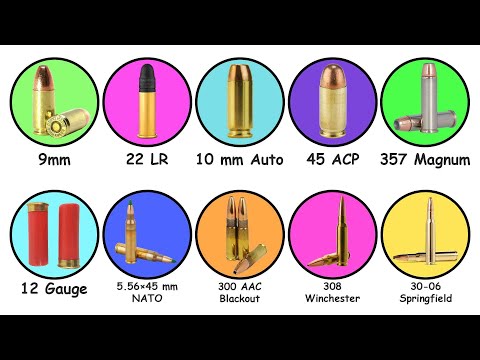
Temperature swings degrade powder chemistry, directly shrinking or spiking muzzle velocity; store rifle ammo below 75°F to keep burn rates predictable. Humidity above 50% corrodes primer compounds, causing delayed ignition and velocity drops—use desiccant packs inside sealed ammo cans. Controlling temperature and humidity to maintain muzzle velocity demands a stable environment, not just seasonal averages. Even a 20°F shift can alter pressure curves enough to shift your point of impact by inches at 500 yards. Monitor both with a digital hygrometer, and avoid attic or garage storage where diurnal cycles wreak havoc.
| Environmental Factor | Velocity Impact | Practical Fix |
|---|---|---|
| High heat (85°F+) | Increased pressure, erratic fps | Cool basement storage |
| High humidity (60%+) | Primer failure, slower ignition | Silica gel, sealed case |
| Rapid temp swings | Powder condensation risk | Insulated container |
Rotating Your Stockpile to Keep Every Round Dependable
Rotating your stockpile is essential for rifle ammo, as it ensures older lots are used before newer purchases, preventing age-related degradation of primers and powder. Adopt a first-in, first-out system by physically moving old boxes to the front of specialty sports your storage and placing new acquisitions behind them. Clearly mark each box with its purchase date using a permanent marker to eliminate guesswork during retrieval. For bulk-packed ammo, rotate entire cases or cans, not just individual rounds, to maintain consistent propellant performance. This practice keeps every round dependable.
- Use Rifle Ammo for Sale older ammunition for range practice to preserve fresher stock.
- Inspect rotated rounds for corrosion or loose primers before firing.
- Discard any rounds with cracked necks or discolored powder immediately.
Reading Pressure Signs on Cases for Safety and Performance
Reading pressure signs on rifle ammo cases is the reloader’s primary diagnostic tool for tuning loads safely and squeezing out peak velocity. Inspect the primer pocket after each firing; a flattened primer with a smoothed radius signals excessive bolt thrust, while a cratered firing pin strike indicates pressure is nearing the case’s structural limit. Examine the case head expansion—measure just ahead of the extractor groove with a micrometer; growth beyond 0.0005–0.001 inches demands immediate load reduction. Look for ejector swipes or bright shiny marks on the case rim, which occur when brass flows into 7mm WSM Ammo for Sale the ejector recess under high pressure. Also check for sticky bolt lift in bolt-action rifles; this is often the first practical warning before visible case damage appears. Always inspect the primer cup depth—if it sits flush or below the case head, back off your powder charge by 3–5%. Ignoring these cues risks case rupture and firearm damage, but mastering them yields consistent, accurate loads at the optimal pressure threshold.
Flattened Primers, Ejector Marks, and Case Head Expansion: What They Tell You
Flattened primers, where the firing pin indent loses its radius and the primer face becomes level with the case head, indicate that bolt-face pressure has exceeded the brass’s elastic limit—a classic sign of high chamber pressure. Ejector marks, visible as a shiny or raised circular impression on the case head, occur when the case is slammed against the ejector plunger under excessive pressure from rifle ammo, signaling that the bolt is being stressed. Case head expansion, measured with a micrometer across the base just above the extractor groove, reveals permanent deformation; any increase beyond 0.001–0.002 inches over factory dimensions means the Ammunition for Sale brass has flowed, urging an immediate load reduction. Together, these three indicators provide a reliable, visual chronology of pressure exceeding safe thresholds, allowing you to tune charges before catastrophic failure.
Adjusting OAL and Seating Depth to Optimize Chamber Pressure
Adjusting cartridge overall length (OAL) shifts the bullet’s jump into the rifling, directly altering the pressure curve. Seating deeper reduces case volume, which raises initial burn rate and peak chamber pressure, while extending OAL closer to the lands lowers jump, often spiking pressure faster but with a sharper, more unpredictable onset. For optimizing chamber pressure via seating depth, incremental adjustments of 0.005 inches are mandatory, as even minor changes can swing pressure by thousands of psi. Always work up from a published load, measuring actual base-to-ogive distance, not just OAL, to control jump precisely. A chronograph and case head expansion reading after each step reveal whether the pressure peak is stable or nearing limits.
Q: How does adjusting OAL affect chamber pressure in rifle loads?
A: Seating deeper reduces internal case volume, accelerating powder burn and raising peak pressure. Seating longer toward the lands can create an early pressure 7mm-08 Ammo for Sale spike upon bullet engagement, often producing higher pressure at lower velocities. Always test in small increments.
Cost-Effective Reloading vs. Factory Rounds: Getting More Shots per Dollar

Reloading rifle ammo stretches your budget dramatically, turning once-fired brass into a reusable asset. While factory rounds cost roughly $1.50–$2.00 each for quality loads, handloading can cut that to $0.60–$0.90 per shot, especially with bulk bullets and powder. The real savings compound when you shoot high-volume calibers like .223 Remington or .308 Winchester. **Plus, reloading lets you tailor each round to your rifle’s exact throat and twist rate, improving accuracy while you save.** Q&A: *“Is it worth investing in a press just to save money on rifle ammo?”* — Yes, if you shoot over 1,000 rounds yearly, payback occurs within 6–12 months, and you control every variable from primer seating to powder charge. Factory ammo remains convenient for hunting or immediate use, but reloading rewards consistent shooters with both lower cost and tighter groups. So, for pure shots-per-dollar, handloading wins—especially as you reuse neck-sized cases across multiple firings.
Weighing Brass Life and Component Costs Against Precision Needs
When weighing brass life against precision needs, the cost calculus shifts based on your accuracy threshold. Virgin brass yields the tightest groups but costs roughly double per firing compared to once-fired, which still holds sub-MOA potential if annealed and trimmed consistently. Premium cartridge brass (Lapua, Peterson) tolerates 8–12 firings before primer pockets loosen, amortizing initial cost to near-equivalent of budget brass that fails by the fifth load. Precision demands deep case-neck tension and consistent neck thickness, which forces culling or uniforming inside diameters—added labor and tooling, not just material. If your rifle delivers 0.5 MOA with cheap, soft brass only on the first firing, then factory match ammo becomes cheaper per accurate shot. Conversely, for 1–1.5 MOA hunting or plinking, push brass to incipient case-head separation, ignoring neck splits until they appear, and rerun the same powder charge without trickling. Components dominate cost: powder and primers are fixed, so extending brass life from 3 to 6 loadings cuts per-shot case cost by 50%, but only if you accept annealing every two cycles and occasional fliers from hardened necks. Calculate your hit probability at your engagement distance—if a spent primer pocket costs a five-shot Shotgun Ammo for Sale group opening from 0.7 to 1.1 MOA, that missed 300-yard steel hit wipes out any savings.
Measuring Velocity Consistency of Handloads to Beat Off-the-Shelf Accuracy
To genuinely beat factory ammo, you’ve got to chase single-digit extreme spreads with your chronograph, not just tight groups on paper. Off-the-shelf rounds often vary 30–50 fps between shots, which subtly shifts your point of impact at 300 yards and beyond. When handloading, weigh every charge to the tenth of a grain and sort brass by weight and case volume—this shrinks velocity swings to under 15 fps. Test ten-shot strings, not three, and log the standard deviation; if your SD stays below 10, you’ve outpaced most boxed ammo. Pair that with a consistent neck tension (use a bushing die or mandrel) and a firm crimp, and your muzzle velocities will repeat shot after shot.
Measuring velocity consistency turns handloads from “cheaper” 6.5 Creedmoor Ammo for Sale into “more accurate,” because a tight extreme spread and low standard deviation beat any factory lot’s average performance.